When a macOS Beta Breaks Your Network (and Why I Rolled Back)

Overview

Recently, I ran into a serious networking issue after upgrading one of my Macs (“Ripley”) to a beta release of macOS.

What initially looked like a minor connectivity problem quickly turned into a deeper issue involving the operating system, networking stack, and security software.

This post outlines what happened, how I diagnosed it, and why I ultimately chose to roll back to a stable version of macOS — a decision made painless thanks to a disciplined backup strategy.


The Symptoms

After upgrading to a macOS 26.5 beta build, the system began behaving inconsistently:

  • Wi-Fi had no internet connectivity
  • Ethernet worked, but only partially
  • Some websites (such as banking) loaded correctly
  • Business-critical apps like FileMaker could not connect to FMPHost
  • Sophos Endpoint became inaccessible

This wasn’t a complete outage — it was worse: partial connectivity.


Initial Diagnostics

The first step was to determine whether the issue was external or local.

A quick port test confirmed that the FileMaker service was reachable:

nc -vz a731293.fmphost.com 5003

The connection succeeded, which ruled out:

  • ISP issues
  • Router/firewall problems
  • External service outages

At this point, it was clear the issue was local to the Mac.


What Was Actually Broken

The problem was caused by a combination of:

  • macOS beta networking instability
  • A corrupted or incompatible network extension
  • Interference from endpoint security software

Modern macOS versions rely heavily on network extensions for traffic filtering. When these break (especially after a beta update), they can leave the system in a half-working state:

  • Some traffic flows normally
  • Some traffic is silently blocked
  • Applications behave inconsistently

Exactly what I was seeing.


Why I Didn’t Keep Troubleshooting

At this stage, I had two options:

  • Continue debugging an unstable system
  • Cut losses and rebuild cleanly

I chose the latter.

When the foundation is compromised, rebuilding is often faster than repairing.


The Recovery Strategy

1. Download a Full macOS Installer

Instead of relying on Software Update, I used Terminal to download a clean installer for macOS Sequoia:

softwareupdate –list-full-installers

softwareupdate –fetch-full-installer –full-installer-version 15.7.7


2. Create a Bootable USB Installer

sudo /Applications/Install\ macOS\ Sequoia.app/Contents/Resources/createinstallmedia –volume /Volumes/installer

This created a fully bootable installer.


3. Perform a Clean Installation

  • Boot from USB
  • Erase the internal drive
  • Install macOS from scratch

4. Restore Using Migration Assistant

Direct migration from the beta system wasn’t possible, as macOS does not support migrating from newer to older versions.

Instead, I migrated from another Mac running the same stable OS.


5. Restore Critical Components

  • User data migrated cleanly
  • Windows 11 VM restored from backup
  • Key apps reinstalled:
    • FileMaker
    • Sophos Endpoint

The Result

After the rebuild:

  • Networking was fully restored
  • FileMaker connected without issue
  • No residual beta artefacts remained
  • The system was stable and predictable again

Downtime was minimal thanks to preparation.


Key Lessons

Beta Software and Production Don’t Mix

If your system relies on business-critical tools, avoid beta OS builds.


Partial Connectivity Is a Red Flag

If some services work and others don’t, the issue is usually local. not the network.


Backups Are Only Valuable If They Work

Backing up the Windows VM separately made recovery fast and painless.


Rebuild Beats Repair (Sometimes)

When core system components are unstable, a clean rebuild is often the fastest path forward.


Control Your Install Process

Using full installers and bootable media gives you complete control and avoids surprises.


Final Thoughts

This experience reinforced a simple idea:

A system should be rebuildable at any time, not just repairable.

With the right preparation, what could have been a major disruption turned into a straightforward recovery.


If you’re running a mixed environment with macOS, virtual machines, and cloud services, the takeaway is simple:

Stability isn’t luck — it’s design.
Earthrise, 2026 — Still Not Flat, Still Very Real

Well… there it is.

After all the waiting, all the quiet coasting through deep space, Artemis has delivered.

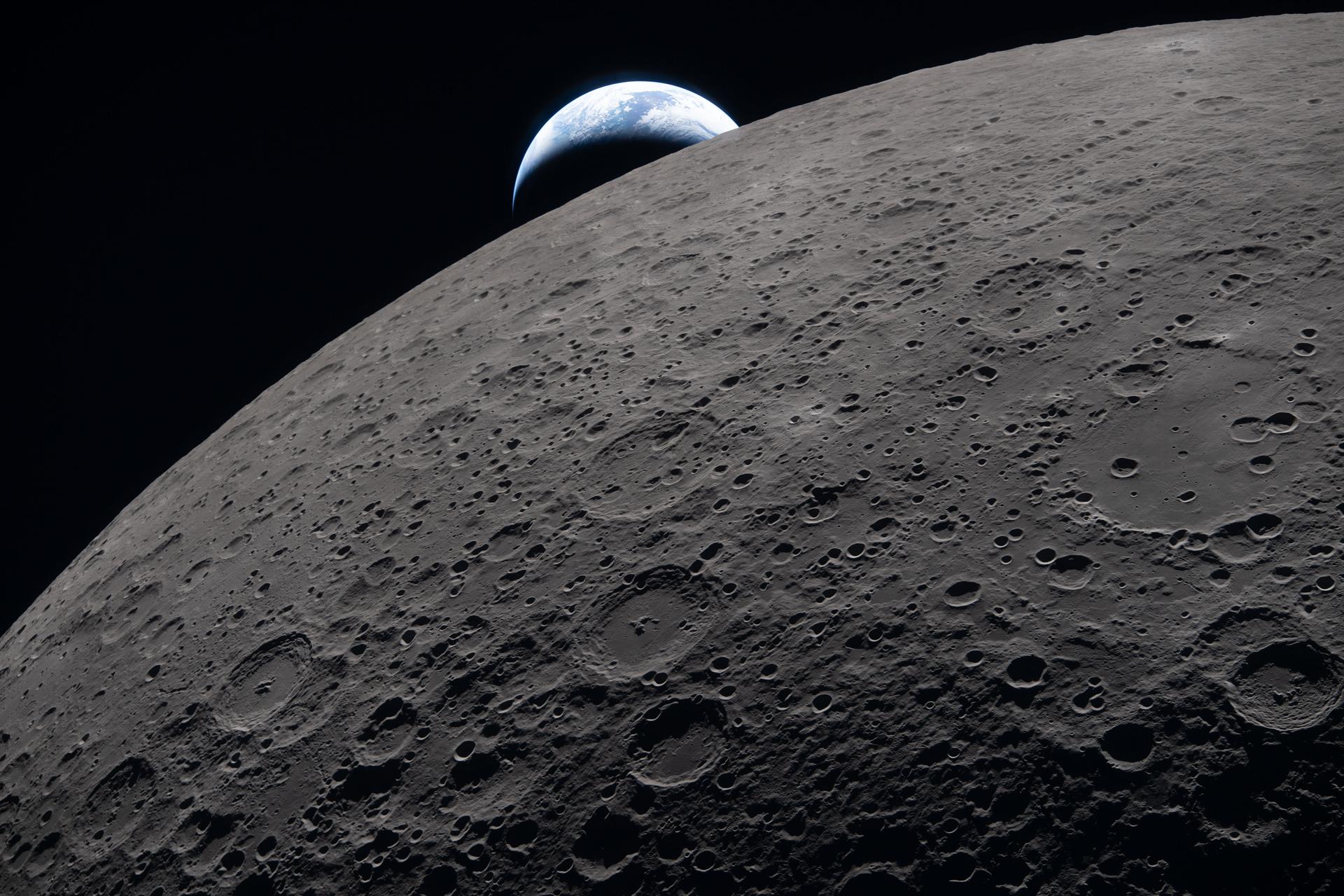
A new Earthrise.

And just like in 1968, it doesn’t shout.

It doesn’t argue.

It simply… shows.


The images

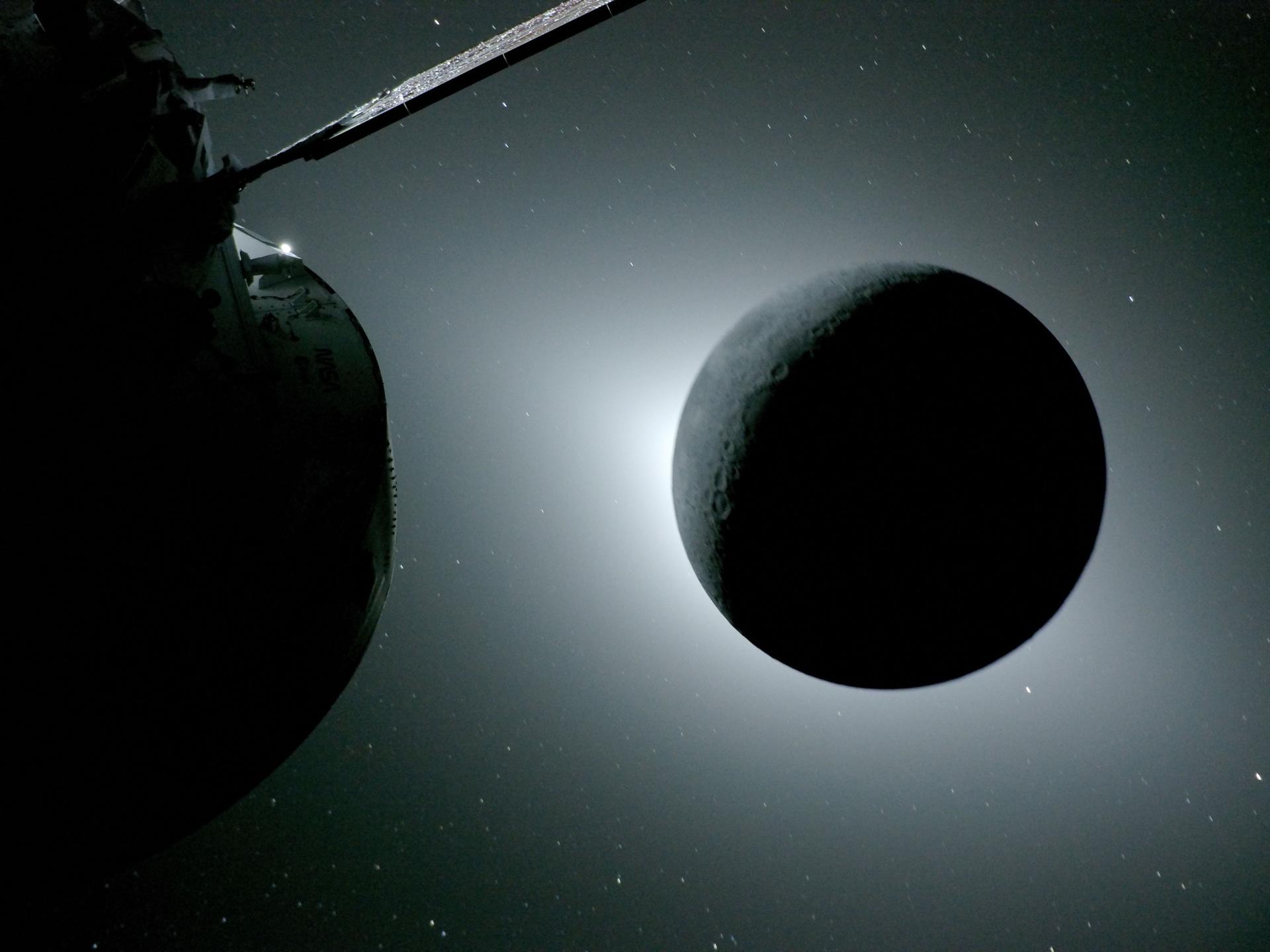
Then, the Moon, backlit. A perfect dark sphere with sunlight wrapping around its edge. Orion sitting there quietly, doing exactly what it was designed to do.


What you’re actually looking at

These aren’t just pretty pictures.

They represent:

  • A spacecraft that travelled hundreds of thousands of kilometres
  • A trajectory calculated so precisely it loops around the Moon and comes home
  • Systems, materials, and engineering built on decades of knowledge
  • Humans, once again, operating beyond low Earth orbit for the first time in over 50 years

No drama.

Just:

“All systems nominal.”


A gentle note to the sceptics

Now, I know… somewhere out there, someone is typing:

“It’s CGI.”

Of course it is.

Along with:

  • The Apollo Guidance Computer (which you can literally power on today)
  • The Saturn V rocket (still standing, still explainable bolt by bolt) (Hat’s off to Luke Talley)
  • The engineers — past and present — who can walk you through every system in detail
  • And now… Artemis, repeating the journey in full public view

At some point, you have to admire the scale of the “production.”

Because apparently, it’s been running flawlessly for over half a century.


The quiet power of this moment

Back in Apollo 8, astronauts didn’t set out to take the most famous photograph in history.

They just noticed something.

Earth… rising.

That same thing has happened again.

Different spacecraft. Different era.

Same reality.


Why it matters

This isn’t about proving anything to anyone.

It’s about perspective.

That small blue arc above the Moon isn’t:

  • A country
  • A border
  • A disagreement

It’s: Home


Final thought

Rockets don’t care what we believe.

Cameras don’t care either.

They just record what’s there.

And right now, what’s there is undeniable:

  • We Went Back
  • We saw it again
  • And it’s just as sensational as the first time

From Slide Rules to Starships — Artemis Is Flying, Whether You Believe It or Not

There’s something quietly extraordinary happening right now.

Humans are once again on their way to the Moon.

Not in a movie. Not in a simulation. Not buried in a comment thread somewhere between “fake” and “flat”, but in an actual spacecraft, currently tens of thousands of miles from Earth, doing exactly what physics says it should be doing.

I’ve been watching the Artemis mission closely — as a NASA virtual guest (plus one included 😄) — and as a long-time member of The Planetary Society, an organisation that has spent decades advocating for exactly this moment.

And the thing that strikes me most is not the spectacle…

It’s the calm.

No drama. No panic. Just:

“All systems nominal.”

That’s how real engineering looks.


A quick reality check

Back in 1968, Apollo 8 sent humans around the Moon using:

  • A computer with less memory than a digital watch
  • Navigation done by sighting stars through a sextant
  • Software literally woven by hand

Today, Artemis uses modern avionics, real-time telemetry, and deep space communication networks.

Different tools.

Same outcome:

👉 We go to the Moon.


“But what about…?”

Ah yes — the inevitable internet commentary.

To believe the Moon landings didn’t happen (or that we somehow “can’t” go back), you have to ignore:

  • The Apollo Guidance Computer — physically restored and running
  • The Saturn V rocket — standing in full scale, explained by engineers who worked on it
  • Decades of telemetry, independent tracking, and consistent engineering evidence
  • The fact that thousands of people, across multiple organisations, would have had to keep the same secret… perfectly… for over 50 years

At some point, it becomes less about evidence…

…and more about imagination.


The thumb test

Astronaut Jim Lovell once held up his thumb and realised it could block out Earth.

That tiny blue dot — everything we’ve ever known — reduced to something you could hide behind your hand.

Artemis is heading back into that perspective.

And when we get our first modern “Earthrise,” I suspect it will do what it did in 1968:

Quiet the noise.


Why this moment matters

For many of us, this isn’t just a launch.

It’s a continuation.

From Apollo…

through decades of advocacy, science, and persistence…

to Artemis.

The idea never went away.

It just took time to come back.


Final thought

Rockets don’t care what we believe.

They either work…

or they don’t.

And right now, Artemis is working beautifully.


So here’s to the engineers, the astronauts, and yes — even the sceptics.

Because whether you’re watching in awe or arguing in the comments…

We’re going back to the Moon.

And this time, we’re doing it with the whole world watching.