

With Windows 10 now officially unsupported, continuing to rely on it is no longer a neutral decision. It introduces growing security risks, compliance concerns, and operational friction.
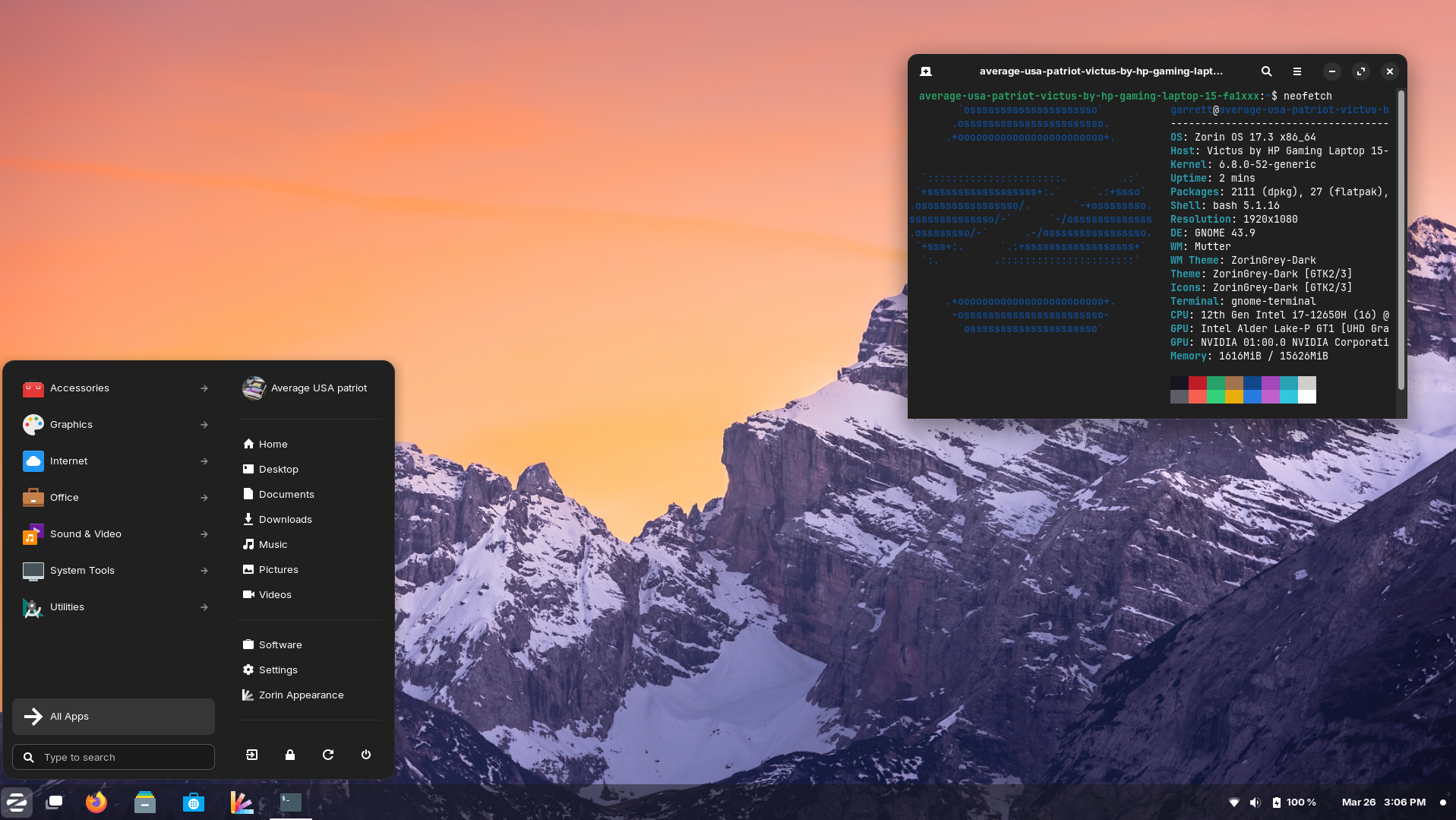
Based on the work already completed, moving to Linux is not only viable, it is a measured, responsible, and future-proof decision.
1. Security Becomes a Business Risk, Not Just an IT Issue
Once Windows 10 stops receiving security updates, every unpatched vulnerability becomes permanent. Over time, that risk compounds.
Linux offers:
- Continuous security updates
- Strong permission separation by design
- A significantly smaller malware attack surface
- No dependency on third-party antivirus software
From a governance and risk perspective, running an unsupported operating system is increasingly difficult to justify. Linux restores a secure baseline.
2. No Forced Hardware Replacement
Modern Windows upgrades increasingly require:
- TPM enforcement
- Newer CPUs
- Vendor-approved hardware
Linux runs efficiently on existing hardware, including systems Windows now considers obsolete. The work already done confirms that Wi-Fi, Bluetooth, graphics, and peripherals operate reliably without replacement.
The result:
- Lower capital expenditure
- Extended hardware lifespan
- Reduced electronic waste
3. Predictability Instead of Forced Change
Windows updates frequently introduce:
- Unrequested UI changes
- Feature removals
- Background services and advertising
- Behaviour changes after updates
Linux updates are:
- Transparent
- Optional
- Reversible
- Administrator-controlled
Nothing installs unless it is explicitly approved. This removes a significant source of operational uncertainty.
4. A Familiar User Experience Without the Bloat
Modern Linux desktops provide:
- A familiar Windows-like workflow
- Fast and responsive performance
- No ads, pop-ups, or telemetry
For users:
- Browsers, email, Office-compatible tools, and PDF workflows work as expected
- Bluetooth mice, keyboards, CAD devices, scanners, and printers function normally
- No forced cloud accounts or subscription prompts
Training overhead is minimal, especially compared to adapting to newer Windows versions.
5. Licensing Costs Drop to Zero
Linux eliminates:
- Operating system licensing fees
- Subscription-based OS models
- Artificial feature tiering
This is particularly valuable when:
- Redeploying older machines
- Building task-specific systems
- Creating admin, kiosk, or utility workstations
The operating system becomes infrastructure, not a recurring cost.
6. Stability for Purpose-Built Workflows
Linux excels in clearly defined roles, including:
- Administrative workstations
- Production and CAD support systems
- File management and automation
- Remote access environments
Linux systems do not “drift” over time. A machine configured today will behave the same way months later, without surprise regressions.
7. A Strategic Reset, Not a Lateral Move
This is not about rejecting Windows. It is about acknowledging that:
- Windows 10 is now a liability
- Newer Windows versions impose constraints that do not align with operational needs
- Linux provides control, longevity, and clarity
This represents a shift from a consumer-driven OS model to an engineered platform.
Bottom Line
Staying on Windows 10 is the risky option.
Moving to Linux is the controlled, secure, and forward-looking decision.
We retain our hardware, reduce costs, improve security, and regain control of our systems while delivering a stable and familiar experience for users.
Based on the work already completed, Linux is ready.
 What? There's more hill?
Great article! It makes a strong case for moving from Windows 10 to Linux, especially now that Windows 10 is no longer supported and security updates have stopped. Linux really shines with continuous updates, fewer forced upgrades, better privacy, and the ability to run well on older hardware, which makes it a practical and future-proof choice for many users.